PTENES
Free kit · Claude Code and Codex

Your second brain with AI, in files you control

An assistant that knows you, your work, your priorities, and your tools. It responds like a partner, not a generic chatbot. Everything in Markdown, with no vendor lock-in.

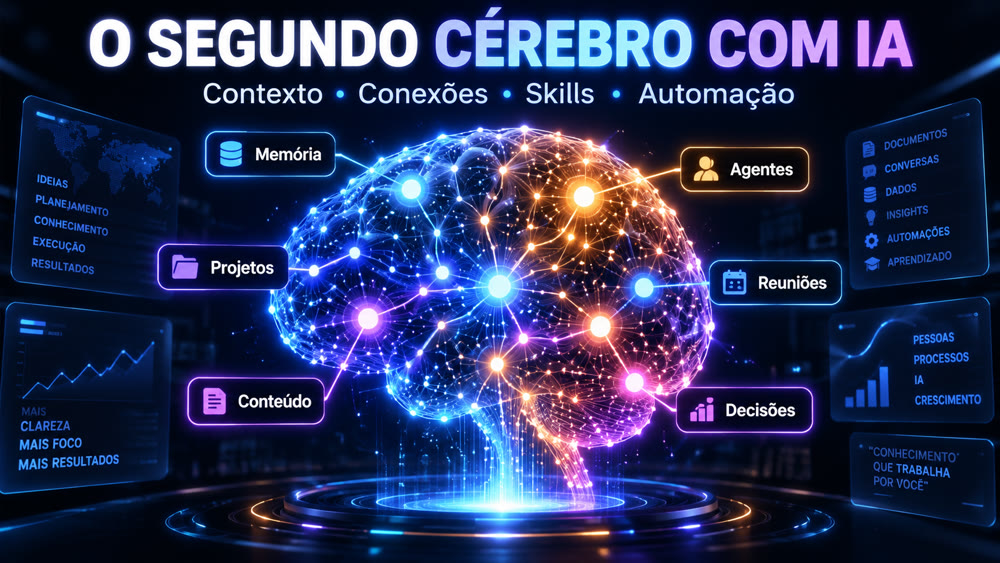
The AI-powered second brain: context, connections, skills, and automation
What it is

A personal AI operating system, made of folders

The kit installs a file structure and eight skills in your Claude Code or Codex. The agent reads the manual before each message, knows where everything lives, and looks things up instead of guessing.

🧠 Truly knows you

A 7-question interview creates the initial context: who you are, what you do, who it’s for, what matters this quarter, and how you write.

🔗 Connects, rather than accumulates

Transcripts, documents, and notes become interconnected wiki pages. People, projects, meetings, and decisions appear linked, and the 3D brain shows them.

📈 Improves in cycles

An audit scored from 0 to 100 based on evidence, followed by one improvement at a time. The history shows progress month by month.

How it works

Four pillars, one cycle

Context and Connections form the second brain. Capabilities and Cadence form the operating system. The order matters: without the first two, skills and automations are generic.

/iniciar→ use for a week→ /auditar→ /evoluir→ build→ /auditar
1

Context

What changes little: who you are, your work, goals, and audience. It lives in contexto/, referencias/ e wiki/.

2

Connections

Everyday tools where data changes constantly: email, calendar, tasks, finances. Recorded in conexoes.md.

3

Capabilities

A short phrase triggers a multi-step workflow that delivers something usable. The skills are in .claude/skills/ e .agents/skills/.

4

Cadence

Useful things happening without you asking, with execution logs in rotinas/. Only after they work manually.

Prerequisites

Almost nothing beyond the agent you already use

You don’t need to know how to code. You talk to the agent, and the skills do the rest.

Claude Code or Codex

One of the two, installed with an active subscription. The skills work the same in both.

# check
claude --version
codex --version

Terminal with bash (optional)

Only for the one-line installer. On Windows, use Git Bash or WSL. Without bash, the agent installs it for you.

# Linux, macOS, Git Bash, WSL
bash --version

Node.js 22+ (only for the 3D brain)

If you use Claude Code or Codex, you already have it. The 3D app runs without installing dependencies.

# must be 22 or higher
node --version
User guide · step by step

From zero to an audited brain in 14 days

The commands below work in Claude Code with / and in Codex with $.

1

Install the kit

One line in the terminal creates the structure in a folder and installs the eight skills. Running it again is safe: nothing of yours is overwritten.

curl -fsSL https://raw.githubusercontent.com/inematds/astra-2cerebro/main/install.sh | bash -s -- ~/meu-cerebro

No terminal? Open the agent in the desired folder and paste:

Instale o kit https://github.com/inematds/astra-2cerebro nesta pasta seguindo o INSTALAR.md do repositório e depois rode /iniciar.
2

Run the initial interview

Open the folder in the agent and answer 7 questions. It takes about 15 minutes. The writing sample must be pasted from a real text, not typed in chat.

cd ~/meu-cerebro
claude          # or: codex
/iniciar        # in Codex: $iniciar
3

Take the “wow” test

Start a new conversation and ask a question. If the answer mentions your priorities and your real pain point, it worked.

Quem sou eu e no que devo focar esta semana?
4

Connect one tool at a time

Think in terms of seven domains: revenue, customers, schedule, communication, tasks, meetings, and knowledge. Ask the agent for the best approach for each one.

Quero conectar o Google Calendar. Qual é o melhor caminho: MCP, API com script, ou exportação?
# it configures and logs to conexoes.md and referencias/<ferramenta>-api.md
5

Feed the brain

20-minute interviews on one topic at a time, and raw material in fontes/ turned into an interconnected wiki.

/entrevista prioridades do trimestre
/entrevista minha equipe e responsabilidades
# put transcripts and documents in fontes/ and then:
/wiki ingerir
6

Audit

On day 7, the audit scores the four pillars with evidence, tests the manual’s routes, and saves a dated report. A new installation is marked “Not verified.” That’s expected.

/auditar
# report in auditorias/AAAA-MM-DD-HHMM.md · notes in auditorias/historico.md
7

Close one gap at a time

Reads the latest audit, picks a gap, scopes it (eliminate, automate, or delegate; the least autonomy that will work; one metric), and delivers an artifact.

/evoluir
# deliverable: saved prompt, script, skill, routine, or verified fix
8

Create routines with logs

When something needs to happen without you asking. The first version is always manual; it only becomes scheduled after two successful runs.

/rotina toda segunda às 8h, resumo das reuniões da semana passada em projetos/
9

See the brain in 3D

An interactive, local globe with search, note reading, flagged old or orphaned pages, cinema mode, and the growth animation.

/cerebro-3d
# generates apps/cerebro-3d/ · then: node build.mjs && node serve.mjs
Commands

The eight skills

The same in Claude Code and Codex. The agent’s manual (AGENTS.md = CLAUDE.md) lists them all and keeps the route map.

/iniciar

A 7-question interview. Creates context, voice, connections, and the manual. Run it again whenever you want.

/entrevista

In-depth interview on a topic, saving each answer to a file.

/wiki

Raw sources become interconnected pages with an index and log. Ingest, search, review.

/vincular

Adds a route to the manual for a project, folder, or source.

/auditar

Score from 0 to 100 across the four pillars, with evidence and a dated report.

/evoluir

Close an audit gap by delivering an artifact.

/rotina

Recurring routine with a trigger, output, instructions for stopping, and run log.

/cerebro-3d

Local 3D globe of saved knowledge, in PT-BR, with no dependencies to install.

Roadmap

What’s ready and what comes next

The kit starts lean by design. The file EXPANSOES.md inside the brain tells you what to add as it grows, and what not to add.

v1.0
Complete kitSecond-brain template in PT-BR, eight skills for Claude Code and Codex, idempotent installer, audit with history, wiki, routines, and translated 3D brain.
Next
Local dashboardCalendar, messages, and metrics on one screen, reading the same connections as the brain. Ask the agent to set it up after the connections exist.
Next
PowerShell installerToday, Windows without Git Bash or WSL uses the agent-based method, which copies the files for you.
Next
More 3D adaptersDirectly reads Notion and Drive exports, JSON transcripts, Markdown, and agent memory.