
You need to decide
Which feature to build first, which proposal to accept. Two AIs answer without conferring and show the sentence that convinced them.
Uses: independent opinions
You don't have to leave Claude for Gemini. Use both: Fable, Claude's largest model today (Nov 2026), plans; Neon (Gemini 4 Neon, Google's new model) builds; and each one checks the other's work. In our test, a site with 5 hidden defects: both caught all 5, one by reading the code and the other by using the site as a customer.


In one sentence
You want the best of each AI without having to pick just one. This free kit shows 8 ways to put Claude and Gemini to work together, and tested 4 of them for real:
Each AI works in its own app, on your subscription. You make the call.
Who it's for
Which feature to build first, which proposal to accept. Two AIs answer without conferring and show the sentence that convinced them.
Uses: independent opinions

A task board, a page, a small tool. One AI thinks through the plan first; the other builds on top of it.
Uses: plan and build

Before going live, you want someone checking what you didn't see: text that vanishes in dark mode, a broken link, an exposed password.
Uses: fix loop and gatekeeper
How it works
Who does what changes; the rule stays: each AI works on its own, and at the end something with no AI checks.
Paste the prompt. The AI looks at your project and suggests the way.
WhyEach way solves one problem: deciding, building, fixing, blocking.
Plans, answers or reviews, in a conversation of its own.
WhyKept apart, one can't copy the other.
Builds, answers or checks, in Antigravity: the Google app where Gemini works, like Claude Code for Claude.
WhyThe two work differently; one covers the other's blind spot.
Looks up the quote in the original, tests what was built, measures the contrast or compares against the list of defects.
Read the result with the proof next to it and decide.
WhyTwo AIs agreeing proves nothing. The yardstick does.
The 8 ways
The first four ran for real on November 27, 2026, checked by a yardstick with no AI. The other four come at the end, with a ready-made prompt.
Way 1 · tested
To decide between two options with a real second opinion.
The same question goes to Opus (another Claude model) and to Neon, each in a new conversation. Each one chooses and quotes the exact sentence that decided it. In the test: with 5 customer interviews, should "export the list" or "saved filters" come first? Two exercises, each with the order of the options swapped.
Like in everyday life: two doctors who don't talk to each other. If both recommend the same thing and show you where they saw it on the exam, you trust it more.
8 of 8 answers agreed, and every quote exists word for word. Each answer took 13 to 21 seconds.
Way 2 · tested
To build something without the AI rushing in before thinking.
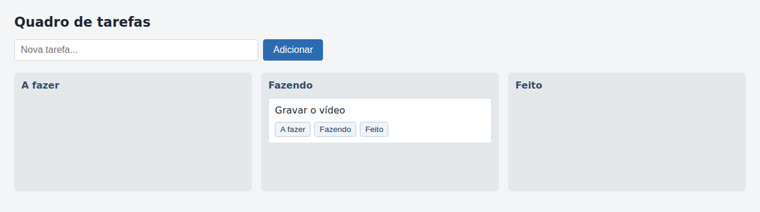
Fable writes the plan before a single line: what to store, the stages and the hard cases. Neon builds from it. Then a browser tests it like a person: tries an empty card, creates one, moves it to another column and reloads the page.
Like in everyday life: the architect draws the blueprint, the foreman builds from it, and the inspection opens every door before handing over the key.
Plan in 82 seconds, build in 110. The task board passed the test on the 1st try.
Way 3 · tested
To find and fix what you didn't see, without endless back and forth.
The kit takes a phone-sized screenshot of an order page, in light and dark. Neon points out the text you can't read, Opus fixes it, Neon looks again, and a yardstick with no AI measures the contrast. We hid two defects: the coupon nearly white on a white background and the total nearly black on a dark background.
Like in everyday life: the proofreader marks the mistake in red, the writer fixes it, and the proofreader reads it again.
In round 1, Neon found both defects. Opus fixed them in 48 seconds. In round 2: 0 unreadable, and the yardstick agreed.




Way 4 · tested
So nothing goes live with a defect that one of the two would have spotted.
Both review the same site, each on its own, without changing anything. If either one rejects it, nothing goes live. In the test, we hid 5 defects: a broken link, an image that doesn't exist, an exposed password, a form that sends data unprotected and a button that does nothing.
Like in everyday life: a safe that only opens with two keys. If one person doesn't turn theirs, the safe stays shut.
Both found 5 of 5 and held back publishing. In this test, Claude raised 12 findings in 40 seconds by reading the code; Neon raised 8 in 97 seconds, signing up as a user.
They're in the kit with the prompt translated. Read them as ideas, not as results.
Way 5
Imaginary customers visit your site and say what they thought. MiroFish is an open program that simulates crowds.
The prompt"Use MiroFish to simulate hundreds of people who might visit our website. Write down each one's exact phrases and, when all the simulations are done, gather and organize those phrases."
Way 6
Each AI builds one part, with an agreed format. Sonnet is another Claude model.
The prompt"Build the screen for our video-cutting tool using this agreed format for the start and end of each cut. Only touch the screen folder, because Sonnet is building the cut exporter at the same time."
Way 7
According to the author of the idea, video goes to Neon and text goes to Claude.
The prompt"Watch this video and note every visual change, every cut and every change of pace in the first minute. Then send those notes to Opus so it can merge them with the transcript."
Way 8
One AI is in charge and hands parts to the others. Firecrawl is a program that reads websites for the AI.
The prompt"Design a 3D mockup of my new studio from these photos of the room. Pass the furniture sizes and the budget to Sonnet. Ask Opus for all the research, with something like Firecrawl, and adjust the floor plan to what it finds."
| Way | What for | What we measured |
|---|---|---|
| 1 · Independent opinions | deciding between two options | 8 of 8 matched, quotes correct |
| 2 · Plan and build | building without improvising | passed on the 1st try |
| 3 · Fix loop | finding and fixing what goes unseen | 2 unreadable → 0 |
| 4 · Gatekeeper | blocking defects before launch | 5/5 and 5/5 |
| 5 · Persona panel | hearing imaginary customers | not tested |
| 6 · Two parts at the same time | saving time | not tested |
| 7 · Pick by input | using whoever reads the material best | not tested |
| 8 · A lead that delegates | a big task with several parts | not tested |
SourceThe idea of the 8 ways comes from Mark Kashef's video, "8 Ways to Use Claude and Gemini 4 Neon Together". The tests, the numbers and the kit are ours.
Key questions
Not necessarily. The two agreed 8 times out of 8, but they read the same 5 interviews: if an interview is wrong, both get it wrong together. What counts is the quote: the kit searches for the quoted sentence, word for word, in the original text, and a made-up sentence doesn't pass. Agreement is extra reassurance; disagreement is a signal to look closer.
Like in everyday life: two people who read the same newspaper tell the same story. That doesn't prove the story is true; it proves the newspaper said it.
No. The kit uses Claude Code, with your Claude subscription, and Antigravity, with your Google account. No API key. Each step draws on your subscription, like an ordinary conversation; the yardstick that checks is a regular program, with no AI.
Like in everyday life: it's using the gym you already pay for, instead of hiring a trainer by the hour.
According to Mark Kashef, who compared the instructions each company gives its own model, Neon is guided to ask before assuming; Claude, to act once it has enough information and to make a recommendation; and Fable, to push through common errors without stopping to ask. His summary: "Neon was made to question and build as a team; Claude, to decide and get the job done". That's his opinion: we didn't verify it.
In the gatekeeper test, Claude read the code and flagged more things; Neon opened the site and signed up as a user. Together, they covered both sides.
That one is better. It was a small test, run in a single day.
Like in everyday life: one reads the whole contract; the other visits the property and tries the taps. Both find problems, but not the same ones.
Before installing
In practice
Open Claude Code in your project folder.
Paste the prompt. The AI reads the kit, checks that you have both subscriptions and explains which of the 8 ways suits you.
Say yes only to what makes sense. Start with just one way and look at the proof for each step.
Read the repository https://github.com/inematds/claude-gemini (the README and the test results). Then check whether I have both subscriptions: Claude with Claude Code, and a Google account with Gemini 4 Neon in Antigravity. If either one is missing, tell me what's missing, without installing anything. Look at my project and explain to me, in plain language, which of the 8 ways of using Claude and Gemini together suits it, with an example of one of my tasks and what each model would do. Don't change, install or run anything before I say yes. Once I say yes, start with just one way, on a copy, and show me the proof for each step.
See the results of the 4 tests on GitHub, with each model's answers.
There's no installer: it's a folder your AI reads and runs. Download the kit ZIP or visit the repository.
How to run each test, swap the models and where each result lives is in the README.
Videos
Measured
Measured on November 27, 2026, on an INEMA computer, on subscriptions (Claude Code with Fable and Opus; Antigravity with Gemini 4 Neon), with no API key. In a first run, Neon came back with no answer when building: with no one at the screen, its app denied a step without saying so. Once that permission was fixed, the recorded run passed on the first try. Source: the results on GitHub.
FAQ
No. You paste the prompt and your AI reads the kit, explains the ways and runs what you approve.
The kit doesn't answer that. It shows how the two together cover more than either one alone.
Yes. Fable, Opus and Neon are the test defaults; your AI can swap in other models your subscription includes.
Yes. Open a conversation in Claude and another in Gemini, give both the same question with the same material and ask for the exact sentence that decided it. Then look for that sentence in the text.
In our tests, the 4 ways ran in about 12 minutes in total.
Come tell us and see other free kits at inema.club, right in your browser.