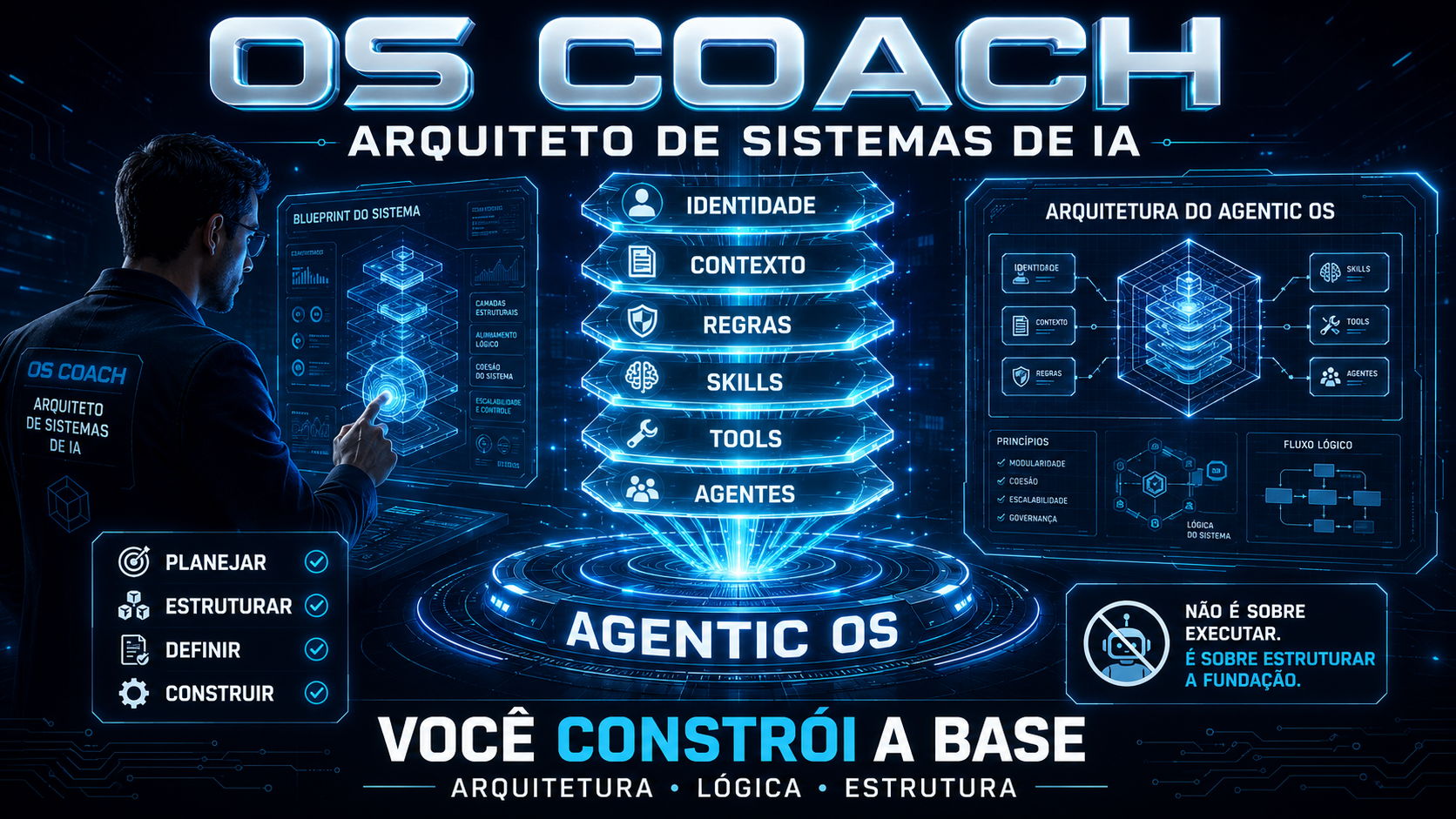
AI Operating Systems Engineering — from zero to a living OS
Build AI command centers, one layer at a time, without becoming an engineer. The course thesis: don’t install an agent OS — cultivate it.
How to read: the stack is built from the bottom up. The lower layers (Identity, Substrate, Rules) are the static foundation; the upper layers (Skills, Tools, Agents) are the action. The #1 mistake is jumping straight to the top (Agents).
Your progress, questions, and notes are saved only in your browser (localStorage). Use My journey to export/import.
What Is an AI Operating System
One AI Operating System (AIOS) is, essentially, a command center for a specific domain of your life or business. It’s not a single product you install—it’s a handful of folders + an identity file (o CLAUDE.md), tool-agnostic (works with Claude Code, Codex, open code).
The author maintains several: a Freedom OS (residences and passports), a Tax OS (laws and audits), a Skool OS (ads in his voice), as well as Health OS and Marketing OS. Each domain becomes a custom OS. The golden rule: cultivate, don't install — a weekend gets you to 80%, but it only becomes solid with daily use and auditing.
The 6 layers—and the pie that isn’t divided equally
Every OS has the same six layers, but the "pie chart" changes shape with each domain: in a Tax OS, context weighs ~34%; in a Sales OS, tools and skills dominate. The order that works goes from foundation to action.
The soul. Who the OS is, whom it serves, what it refuses. It lives in the CLAUDE.md.
The behind-the-scenes layer. The raw and distilled knowledge the OS runs on. The largest layer.
The guardrails. A rule = a strong suggestion; a hook = deterministic (always/never).
The verbs mastered. Repeatable tasks. Start manually, then capture them.
The wires out. The question: skill, CLI, MCP, or API? Read-only CLIs for safety.
Judgment-driven roles that orchestrate skills. The LAST layer — not the first.
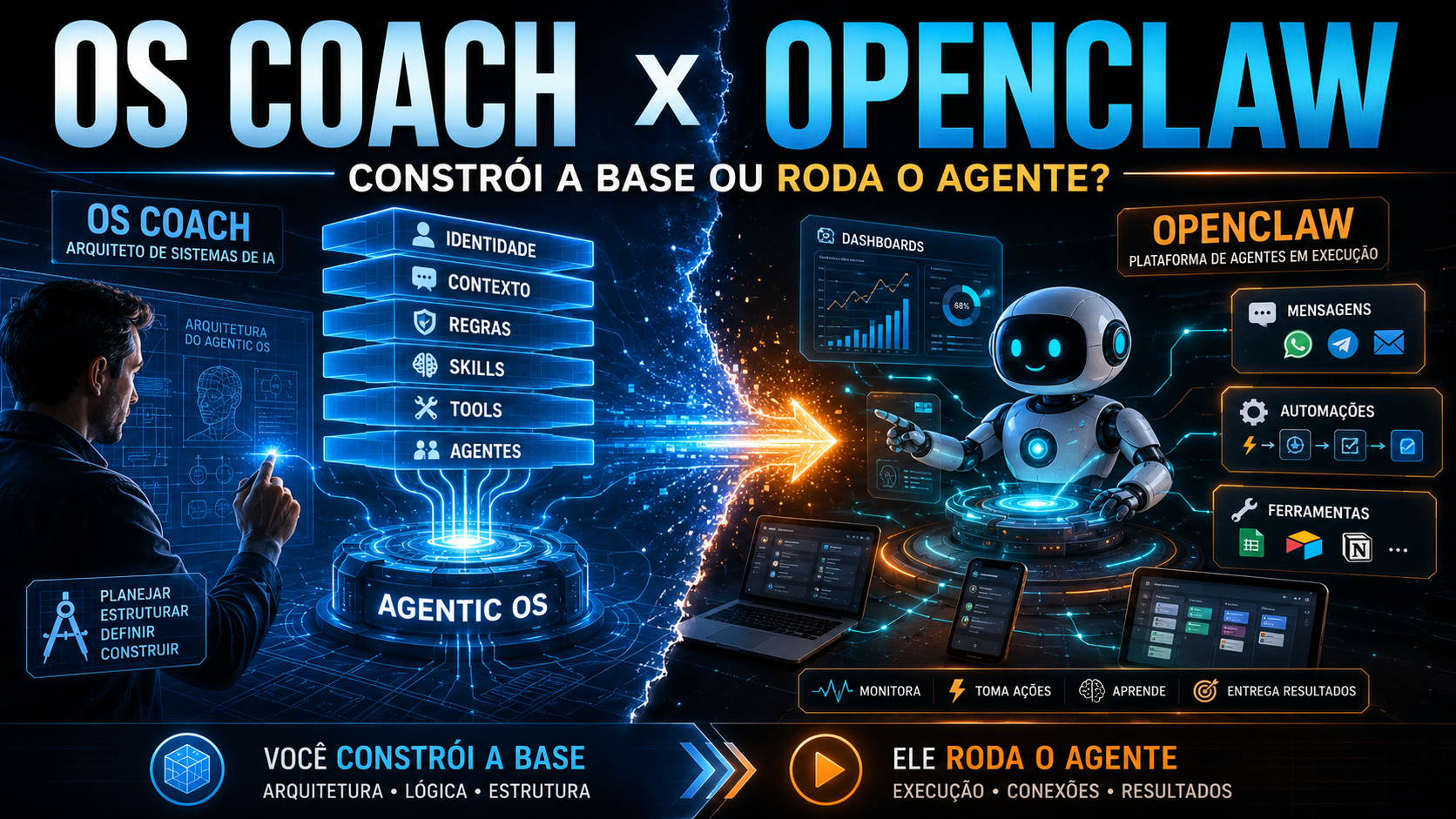
OS Coach × OpenClaw: you build the foundation; it runs the agent
This course teaches you to structure the foundation: Identity, Context, Rules, Skills, Tools, and Agents. First you build the foundation; only then does an agent execute on top of it. That's where an execution platform like OpenClaw (the “Jarvis” that runs the agents): messages, automations, tools, and dashboards. The OS Coach prepares the foundation; OpenClaw runs the agent.
The 5 tracks
📦 What it is, the 6 layers, and the glossary
The mental model and vocabulary. No one moves forward without understanding the terms. 3 modules.
🪪 Identity, Substrate, and Rules
The foundation layers (static). Without them, agents have nothing to build on. 3 modules.
🤖 Skills, Tools, and Agents
The action layers (dynamic). Verbs and arms for the OS—only after the foundation. 3 modules.
⚙️ Your first OS with /os-coach
100% hands-on: from start to the audit, layer by layer. 6 modules.
🗽 Real Domains & Production
The pie chart changes shape across 6 domains (Tax, Sales, Support, Content, Consulting, Freedom) + production patterns. 6 modules.
Prerequisites
✓ You need
- ✓Claude Code (or Codex / open code) installed.
- ✓Know how to open a folder and type simple commands in the terminal.
- ✓One domain in mind (business or personal life) for building your OS.
Doesn't need
- •No programming language. The AI writes the scripts.
- •Prior experience with agents or MCP — everything is defined inline at first mention.
- •Server or build: the pages open directly in the browser (even on file://).
Credits and source
Course based on the module from Living Course from the community earlyaidopters + the open-source skill OS Coach. O /os-coach guides a nontechnical person to build their own agentic OS, one layer at a time, in the loop Ask → Build → Persist → Next → Audit.
github.com/inematds/os-coach ↗