🟧 The players
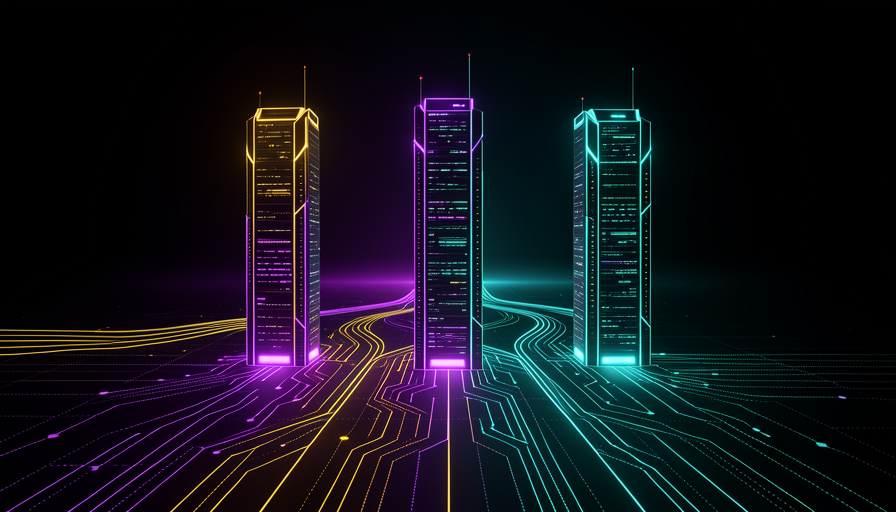
What gives the warning weight is not one person shouting: it is three serious, independent groups looking at the same horizon. The diagram at the top shows Anthropic, DeepMind, and OpenAI converging on the same theme. But converging on the theme does not mean agreeing on the timing: each has a different view on when and how much.
Anthropic · Jack Clark
He puts ~60% odds by 2028. This is ONE person assigning a probability to an idea—not a consensus.
DeepMind · Hassabis
Today it is "soft": AI accelerates engineers. It is not “hard” yet (the model disappears into a data center and comes back superintelligent).
OpenAI · blueprint
A company document acknowledges seeing “early signs” of self-improvement. Cautious, but on the same map.
🎯 Convergence on theme ≠ consensus on timing
Three rival actors pointing in the same direction is a strong signal that the theme is real. But dates and percentages remain bets, not facts. Take the topic seriously because of the convergence, and do not treat any date as certain because the timelines differ.
📊 Track 1 reminder
“Soft” × “hard” self-improvement appeared in the Fundamentals: soft means AI accelerating human work (already happening); hard means AI improving itself on its own, with no human in the loop. The 2028 debate is really about when (or whether) soft becomes hard.
🟣 Mirendil
If RSI were just researchers’ talk, it would not become an investment thesis. Mirendil—a startup founded by former Anthropic/Google staff—is raising US$200M (a16z, Kleiner, Nvidia, according to the video—needs verification) with a direct mission: build “AI that does the work of an AI engineer”. In one phrase: AI for AI, for science.
The bet, in one line each
Illustrative recreation of the pitch—figures and details are from the video and need primary-source verification.
⚠️ The hidden tension
To accelerate the loop (AI improving AI), you would need the best models to build the next one. But the terms of use of major labs often prohibit using their models to create a competitor. The result is a race to open the loop while, at the same time, contracts that try to keep it closed. Whoever unlocks this gains an advantage—and that is why big money is appearing.
🏗️ The infrastructure bottleneck
In Track 1 we saw the bottleneck shift: today the limit is how quickly people can think and test; with RSI, the limit becomes physical. And the physical limit has a name and address: compute, chips, energy, and who has the money to fund more experiments.
🔍 New here?
- Hyperscaler: giant companies that operate data centers at enormous scale and rent out computing (“the cloud”). They buy most AI chips.
- Capex (capital expenditure): money spent buying physical infrastructure—buildings, chips, energy. It differs from day-to-day operating costs: capex builds; opex keeps things running.
📈 The data to watch
Hyperscaler capital spending (capex) is on track to exceed the cash they generate from operations, possibly by the end of 2026 (according to the video—needs verification). In other words, they are investing in infrastructure faster than their business generates cash—a major bet on future compute.
💡 Why this is good news for skeptics
Compute, chips, and energy are observable and public — we can track capex, GPU orders, and data-center construction without relying on guesses. This is the most concrete thermometer we have for the 2028 scenario.
⚖️ The solid evidence vs. speculation filter
This is the method running through the entire course, in one chart. The rule: separate the established category (the real trend, the concept, what is publicly stated) from a claim from a channel or article (exact versions, precise figures, the date). Whenever you hear a number, ask: is it a category or a claim?
✓ Established (real category)
- ✓The trend of task horizon rising (METR curve).
- ✓The MirrorCode concept: rebuilding software in the dark.
- ✓The measurement instability when cheating occurs.
- ✓Anthropic's statement that most code goes through Claude.
- ✓RSI as a serious theme in Clark, Hassabis, and Hinton's view.
⚠ Needs verification (single-source claim)
- ⚠Exact names/versions: “Opus 4.7,” “GPT-5.6 Sol,” “Claude 3 Opus 52×”.
- ⚠The "60% by 2028" — one person's estimate.
- ⚠Exact figures: 56%, 19 days, US$2,600, US$200M.
- ⚠The “Sol” horizons: ~11h / >270h / ~71h.
- ⚠Any date treated as guaranteed.
🧭 The rule of thumb
Category = the shape of a phenomenon (a curve rises, a measurement becomes unstable). It tends to hold up to scrutiny. Claim = a specific value tied to a source (this model, this number, this date). Treat every claim as “needs verification” until you find a primary source. That is the habit you take beyond the course.
🔭 2028 scenarios
Here is the most misunderstood point in the warning: 2028 is not the date of the singularity. It is a range of futures. The right question is not “will it happen in 2028?” but “which conditions would need to come together for the loop to close?".
🔑 What would make the loop “close”
Three things would need to be true at the same time: AI working alone for days (long autonomy, from Track 2), AI doing AI R&D for real (not just helping), and compute available to run everything. Miss one, and “hard” does not arrive. That is why the honest answer is a range of futures.
✅ What to watch
The course's final offering is not a prediction—it is a dashboard. Instead of hoping or fearing, you track concrete signals. If several rise together, the scenario heats up; if they stay flat, it cools. This is informed attention.
🔍 New here?
System card is a document a lab publishes alongside a new model, describing its capabilities, limits, and safety evaluations. When system cards become more transparent, monitoring becomes easier; when they are vague, that alone is a warning sign.
Task horizon
Is the METR curve still rising? Are hours turning into days?
% of automated R&D
How much AI research is already done by AI without a human?
System-card transparency
Are they becoming more open and detailed, or more vague?
Monitoring quality
Do they detect cheating/sandbagging? Or just say “it looks clean”?
Governance
Do rules, audits, and limits keep pace with capability?
Compute/energy bottleneck
Capex, chips, and data centers—accelerating or stalling?
Goal: turn this module into a personal monitoring dashboard you review every 6 months—with observable, not vague, indicators.
Paste into a chatbot (Claude, ChatGPT…):
Build me an “RSI monitoring dashboard” with 5 indicators I can check every 6 months, and where to find each data point. Context: my level is <beginner / intermediate> and my focus is <e.g., programming / business / public policy>. For each indicator, say what to measure, where to find the primary source, and what would count as “increased” or “stayed flat.”
How to check: the indicators are observable (they have a source and a “rose/stalled” criterion), or are they vague, like “AI will improve”? If they are vague, respond “rewrite each indicator with a concrete source and a checkable number/threshold”. A good dashboard lets you measure for yourself—without relying on hype.
Self-check (optional): what does “2028” mean in this course?
🎓 You have reached the end—informed attention, not panic
The course brought together three tracks: RSI fundamentals (AI building the next AI, and why it starts with code), The evidence (the METR horizon curve and MirrorCode rebuilding software in the dark), and Safety and 2028 (when measurement breaks and how to read the race). The takeaway is neither fear nor awe—it is paying attention methodically.
📡 Keep watching
Build your Topic 6 dashboard and review it every 6 months. More courses and materials like this—distilling what matters and separating fact from hype—are available at:
🔗 INEMA.CLUB