📏 Shot Size Is an Emotional Decision
Shot size isn't just about camera distance. It's a emotional and narrative decision.
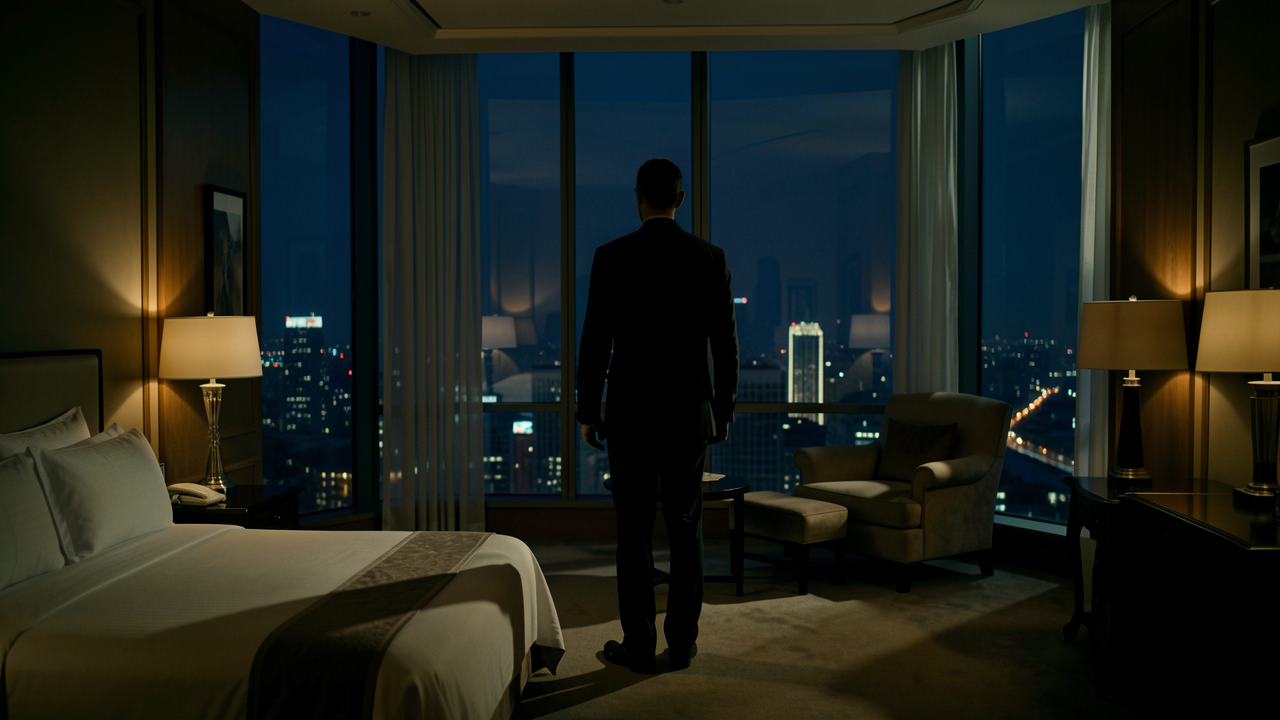
Wide shots
Respond: where are we?
Close-ups
Respond: how does it feel?
Extreme close-ups
Reveal details that can change the story.
👉 Golden rule
Start open to establish the world. Move closer to reveal emotion. End on a close-up or extreme close-up for maximum impact.
🪜 From Establishing Shot to ECU
The shot scale, from the widest to the tightest. Each step has a specific narrative purpose.
| Shot | Shows |
|---|---|
| Establishing / Establishing shot | Location, weather, and scale |
| Wide / Wide Shot | Isolation, danger, or power |
| Medium Wide / Cowboy | Action and body language |
| Medium / Medium Shot | Neutral, realistic dialogue or movement |
| Medium Close-Up | Emotional reaction and intimacy |
| Close-Up | Strong emotion — joy, fear, or determination |
| Extreme Close-Up | Details, suspense, and narrative clues |
👉 Simple decision rule
- •If the location or action matters more → wide shot.
- •If the emotion or reaction matters more → close-up.
- •If a a detail changes the story → extreme close-up.
🎞️ Dolly vs. Zoom vs. Dolly Zoom
The critical distinction in all camera language is between camera movement e lens movement.
Dolly
The camera physically moves through space → parallax, depth, and realism. Immersion.
Zoom
The lens changes the focal length without moving the camera → flatter and more observational. Documentary style.
Dolly Zoom
Movement and zoom oppose each other → spatial distortion. Disorientation and tension.
🧭 Truck, Pan, Tilt, Crane
The coverage moves that organize the scene’s space: move laterally, sweep, and reveal.
➡️ Truck
The camera moves sideways to reveal the surroundings from the side.
↔️ Pan
Horizontal pan from a fixed axis.
↕️ Tilt
Vertical pan. Tilt up reveals from bottom to top.
🏗️ Crane
Broad vertical spatial movement → emphasizes scale and grandeur.
🌐 Orbit, Arc, Whip Pan, Rack Focus
The moves that give the shot a cinematic finish — premium, dynamic, and connective.
🔄 Orbit / Arc
The camera circles the subject → depth and a premium cinematic feel.
💨 Whip Pan
Ultra-fast pan → dynamic transition and energy.
🎯 Rack Focus
Shifts focus from one shot to another → connects visual elements.
⚡ Crash Zoom / Fast Dolly In
Sudden push-in → impact and shock.
Parallax: orbit and arc separate the foreground, subject, and background, increasing depth—which gives AI-generated videos a premium cinematic look.
🤳 Handheld & Dutch Angle
Two direct shortcuts to visceral impact and psychological tension.
🤳 Handheld
- →Realism and documentary energy
- →Raw immersion, physical presence
📐 Dutch Angle
- →Dutch angle → discomfort
- →Instability and psychological tension
🎯 Practical Guide: Intention → Movement
The goal isn’t to know what to use, but when and why. Focus on intentionality — not just how the shot looks, but exactly why that movement was chosen.
| To create... | Use |
|---|---|
| Emotional closeness / intimacy | dolly in |
| Scale or loneliness / isolation | dolly out |
| Reveal vertically, from bottom to top | tilt up |
| Connect visual elements | rack focus |
| Premium cinematic feel | arc shot |
| Realism or documentary energy | handheld |
| Discomfort or instability | dutch angle |
| Impact or shock | fast dolly in / crash zoom |
| Reveal the environment from the side | truck movement |
| Dynamic transition | whip pan |
| Distort perception and induce tension | dolly zoom |
🎬 The final rule
The more needs to the better your camera language, the more cinematic the result will be. Every movement is an emotional choice — not an effect.
📝 Task — Intentional Shots and Camera Moves
Combine the module’s two topics in short exercises:
- 📏Shot: create a 5-second cinematic prompt — choose a shot size and explain why a director would use it to evoke a specific emotion. Include format, setting, lighting, character, and two timestamps with action (practical effects, natural light, no CGI).
- 🎥Movement: create 3 short videos with different movements. For each one, write the prompt and explain why you chose that movement and what emotional purpose it serves.
- 🎯Objective: intentionality — not just how the shot looks, but exactly why that shot and movement.
📌 Module Summary
Next Track:
Track 5 — Visual AI and Generation