🌑 Negative Fill — Darkness Control
Today you’re not just learning about light—you’re learning to control emotion. Great cinematography isn't about adding light: it's remove it. When you take away the light, the shadows deepen, and the frame feels mysterious, inviting, alive.
✗ Light everything
- ✗Flat image, no mystery
- ✗Eye without a clear entry point
- ✗"AI Look" — everything visible, nothing felt
✓ Negative fill
- ✓Deep shadows that create mystery
- ✓Volume and shaping on the subject
- ✓Inviting, lively frame
In filmmaking, light is feeling. The first question isn’t “where should I add light?” but “where to remove light to give the scene depth?".
✨ Edge Contrast & Rim Light
You don’t need to light everything. A thin rim of light is enough to define a subject. The eye naturally follows the contrast — not brightness. Remove the front light, leave only the rim light: the subject becomes mysterious, but remains readable.
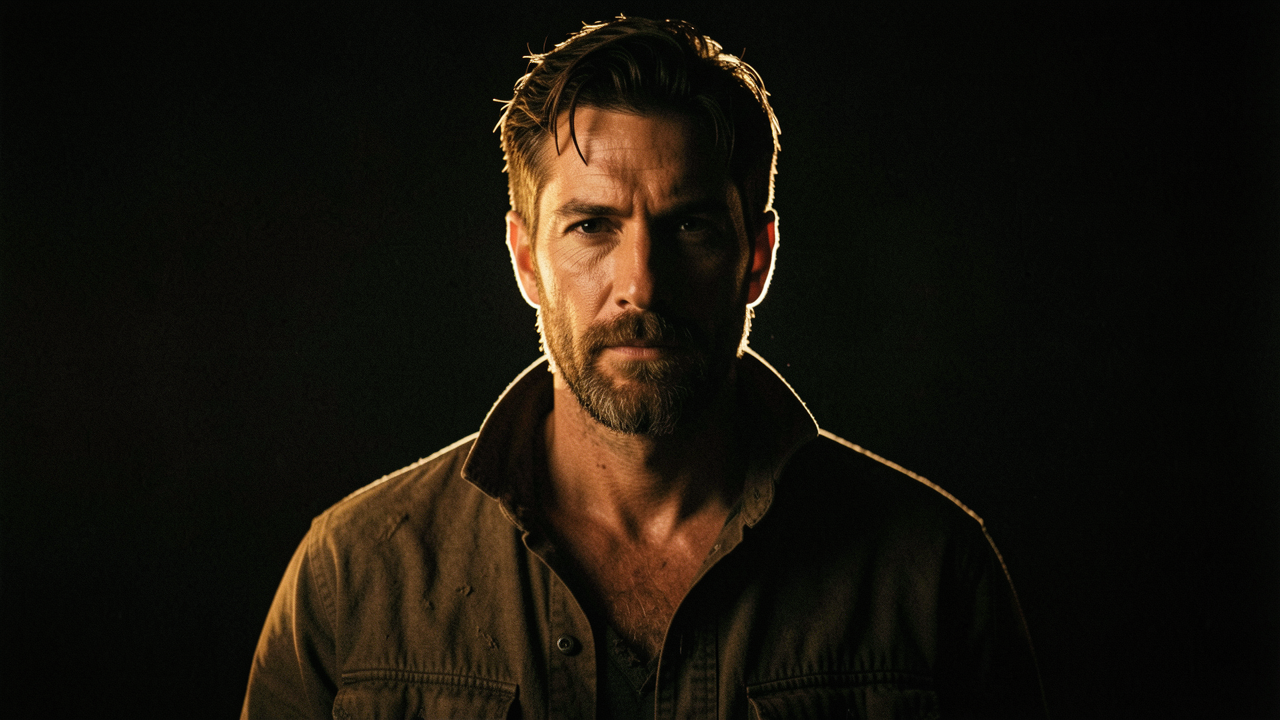
🔎 Why it works
- •The edge separates the subject from the background without needing to reveal the whole face.
- •Contrast, not brightness, is what catches the eye.
- •Mystery + legibility at the same time — the definition of film noir.
🪟 Softness & Motivated Lighting
Soft light isn’t only about large sources—it’s about distance. Bring a small light closer and it envelops the subject like an emotion. And every light needs to come from somewhere real: the sun, a lamp, a screen.
🪟 Softness Through Distance
The closer the light source is to the subject, the softer and more enveloping the light becomes.
💡 Motivated Lighting
Each light has a believable source in the scene: sun, lamp, screen, fire.
If the viewer believes the source, they believe in the scene.
💡 Practical tip
In the prompt, always name the light source: "warm light from a window on the left," "cool glow from a screen." The motivation automatically makes the lighting believable.
📊 The 80/20 Rule & Exposure
Only 20% of your light must be visible. The other 80% remain hidden. That's what creates depth and makes the image feel cinematic rather than flat. Expose for what matters — and let the rest fall into darkness or blow out in the light.
Exposure contrast: don't be afraid to blow out highlights or crush shadows. Focus comes precisely from what you choose to leave outside the correct exposure.
🌫️ Layers & Color Contrast
Depth comes from the layers: foreground, midground, and background. Add fog and the light becomes visible in space. And the warm and cool tones create tension, balance, and emotion — color contrast is what makes the frame feel alive.
🧱 Foreground
Nearby elements that frame the scene and provide scale.
🎯 Medium Shot
Where the subject lives — the focus of attention.
🌄 Background + haze
Fog makes light visible and pushes the background farther away.
🔥 Warm Tones
Humanity, comfort, life. They attract and soothe.
🧊 Cool Tones
Distance, danger, emptiness. They create distance and tension.
🔥 Dynamic Lighting
The light should move. Fire, torches, flickering — they bring the frame to life. Static light looks dead; moving light feels real.
🎯 Central idea — Light is emotion
Not just what we see — but what we feel. Add light movement keywords ("fire flicker", "flickering screen light") to bring the scene out of stillness.
📝 Task — Control with Light
Create a 5- to 15-second video prompt:
- 💡Describe the subject, environment, light sources, colors, and camera movement.
- 🌫️Add 3 to 5 strong mood keywords.
- 🔎Explain your lighting: why is the light positioned this way? How does it shape the subject? What contrast are you using?
- 🎯Objective: control the frame through light and make the viewer feel something real.
📌 Module Summary
Next Module:
4.3 — Depth and Spatial Structure